
What’s causing a slow drain in a residential bathroom is a different problem than what’s backing up a floor drain in a commercial kitchen. The materials involved, the volume of flow, and the consequences of a full blockage are all different, and treating them the same way leads to the same problem recurring within weeks.
Moreover, blocked drains services in Hamilton aren’t a one-size-fits-all category. Hamilton’s commercial corridor, from the waterfront entertainment district to industrial operations in the east end, runs a wide variety of drain systems. Restaurants, food processors, car washes, and light industrial facilities all generate drain loads that residential equipment and techniques simply aren’t built for.
Why Do Commercial Kitchen Drains Block So Much Faster?
The volume and composition of what enters a commercial drain system is categorically different from a home kitchen. Animal fats, cooking oils, starch-heavy water, and food solids pass through commercial drains hundreds of times per service. Grease doesn’t travel cleanly through pipe walls. It adheres, cools, and builds up in layers, progressively narrowing the effective bore of the pipe.
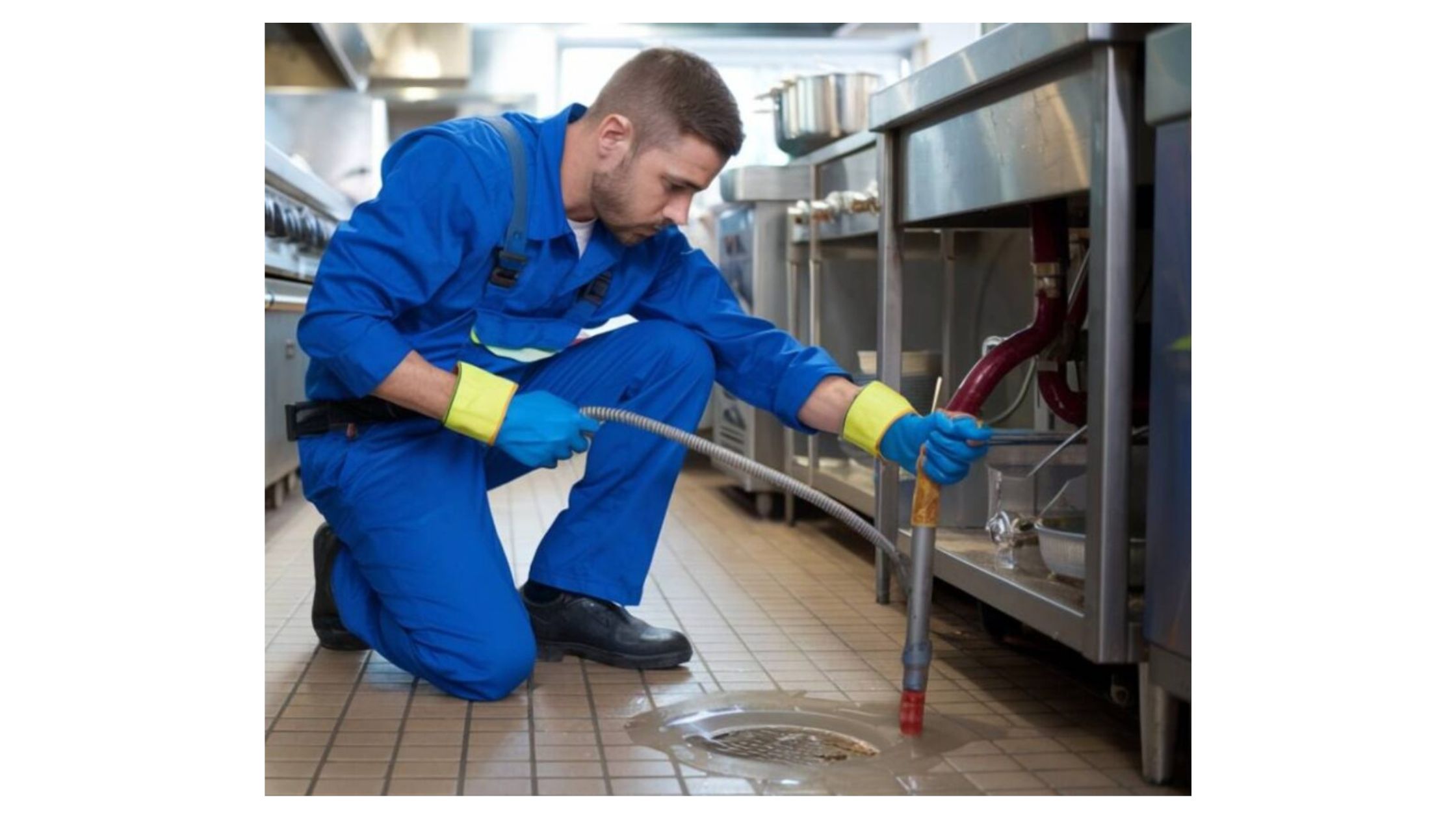
Restaurant drain unclogging in Hamilton involves more than running a mechanical snake. A snake punches through a blockage but leaves the grease coating on the pipe walls intact. Within days or weeks, the coating builds back up and the blockage returns. The correct approach for a commercial kitchen line is hydro-jetting, which uses high-pressure water at 3,000 to 4,000 PSI to scour the pipe walls and flush debris out completely.
What Role Does the Grease Trap Play?
A grease trap or grease interceptor is a required component for commercial food establishments under the City of Hamilton’s sewer use bylaw. Its purpose is to capture fats, oils, and grease before they enter the municipal sewer system. A trap that isn’t cleaned on schedule doesn’t just contribute to drain problems inside the kitchen. It can become a source of hydrogen sulphide gas, which is corrosive to pipe systems and a health hazard in an enclosed space.
Grease trap maintenance frequency depends on the volume of cooking and the size of the trap. For high-volume restaurants, monthly pumping is often appropriate. A plumber familiar with commercial drain systems can assess the trap condition and recommend the right schedule.
What Is Commercial Grease Drain Cleaning and Why Does It Differ?
Commercial grease drain cleaning is a structured process that goes beyond clearing an immediate blockage. It includes jetting the drain lines from the kitchen fixtures back to the main sewer connection, inspecting the grease trap, and conducting a camera inspection if the lines have a history of recurring blockages. The camera inspection is particularly valuable because it can identify structural issues, like cracked joints, misaligned sections, or root intrusion, that cause problems regardless of how clean the grease coating is.
For restaurants operating on tight margins, the cost of a professional cleaning every three to four months is significantly lower than the cost of a drain failure during a busy dinner service. A backup that forces a kitchen to close for several hours means lost revenue, potential health inspection concerns, and staff time dealing with cleanup rather than service.
How Do Blocked Drains Affect Compliance in Hamilton?
Hamilton’s sewer use bylaw sets limits on what can enter the municipal system, including temperature, pH, and fat, oil, and grease content. A food service operation with inadequately maintained grease traps and drain systems is at risk of bylaw violations, which can result in fines and orders to upgrade or repair infrastructure. Regular professional drain cleaning and grease trap maintenance is part of staying compliant, not just operationally functional.
What Should a Commercial Property Manager Look For?
Floor drains that drain slowly, gurgling sounds from fixtures when water is run elsewhere in the building, and recurring odours from drain areas are all signs that the system needs attention. For multi-unit commercial properties, a problem in one unit’s drain line can affect others connected to the same stack. Proactive maintenance across the building is more cost-effective than addressing each tenant’s drain problem individually as they arise.
Keeping Hamilton’s Commercial Drains Clear
A blocked drain in a commercial setting isn’t just an inconvenience. It’s a disruption to operations, a potential compliance issue, and a signal that the drain system needs proper attention. The Hamilton Plumber provides commercial drain services including restaurant unclogging, grease trap assessment, and hydro-jetting across Hamilton. If your operation is dealing with slow drains or recurring blockages, connect through the contact page and get a commercial drain specialist on site before the next service rush.